|
Because sharp enough ... usually is not |

|
Scraper
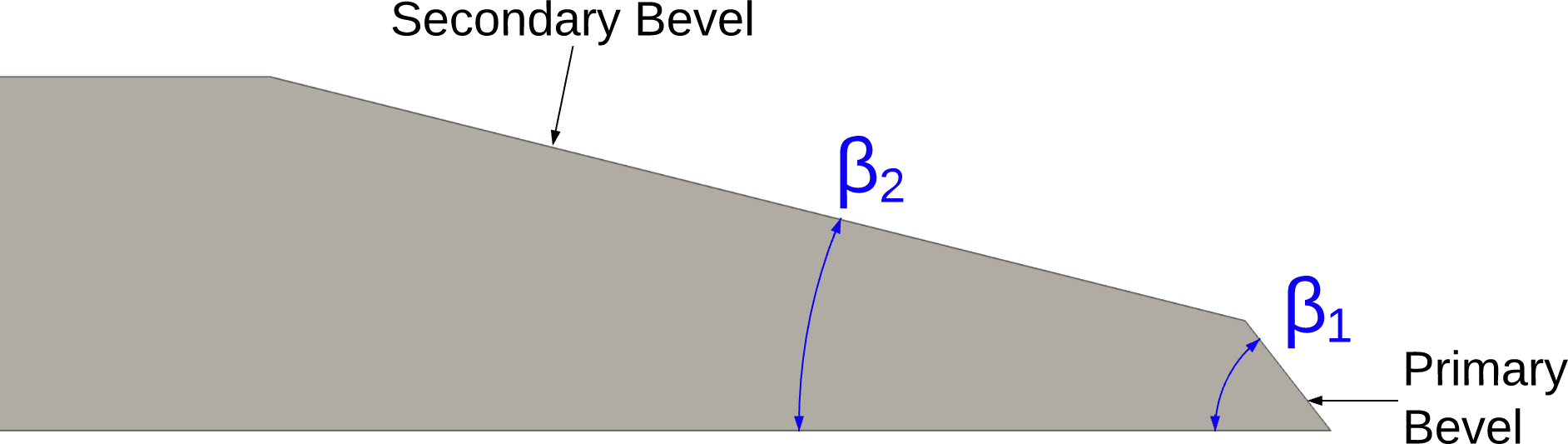
Edge Angles

Overview
The Scraper’s edge is shaped on a belt sander (preferred) or bench grinder.
|
What did you shave with, private? A bowl of milk and an angry cat? Unknown Sergeant |
Example icon
Sharpness scales (as shown in the grey icon to the left) are used to indicate the recommended sharpness for the blades noted above. You can click on any of the icons showing the sharpness scale and be redirected to the page describing this more. Lower numbers are duller; higher numbers sharper.
These are general recommendations; you will need to use your own judgment, based on the knive’s intended purpose.
If grinding this on a high speed grinder or sander, be sure to manage the temperature so that the temper is not lost due to overheating.
| High Carbon Steel |

Temperature control is critical for high carbon steel. Tempering will be lost in the steel if heated until it is blue (~550°F / 300°C). Cool by dipping as needed in water. Dr. Larrin Thomas noted in his book, Knife Engineering: Steel, Heat Treating, and Geometry (2025), The lack of sparks or color changes is no guarantee that the edge was not overheated. Therefore, sparks are not necessarily a sign that heat has or has not been generated in the steel. Color changes can occur from overheating of steel in grinding, but during grinding, the surface is being removed, and the affected volume can be relatively small. Therefore a color change is not always observed. Microhardness measurements of edges sharpened with a belt sander show a drop in hardness at edge. This results from “over-tempering” the edge by heating it above its original tempering temperature. |
| High Speed Steel |
Cool by dipping as needed in water. |
| Steel with Carbide Insert |
It is also recommended to use a high grit wheel for sharpening carbide as lower grits can cause cracks in the edge leading to it being far more crack-ridden and brittle. (Lower grits can be used for shaping the edge -- see also, Grindstones and Other Sharpening Media - Quick Selection Guide.) |
