|
Because sharp enough ... usually is not |

|
General Scissors
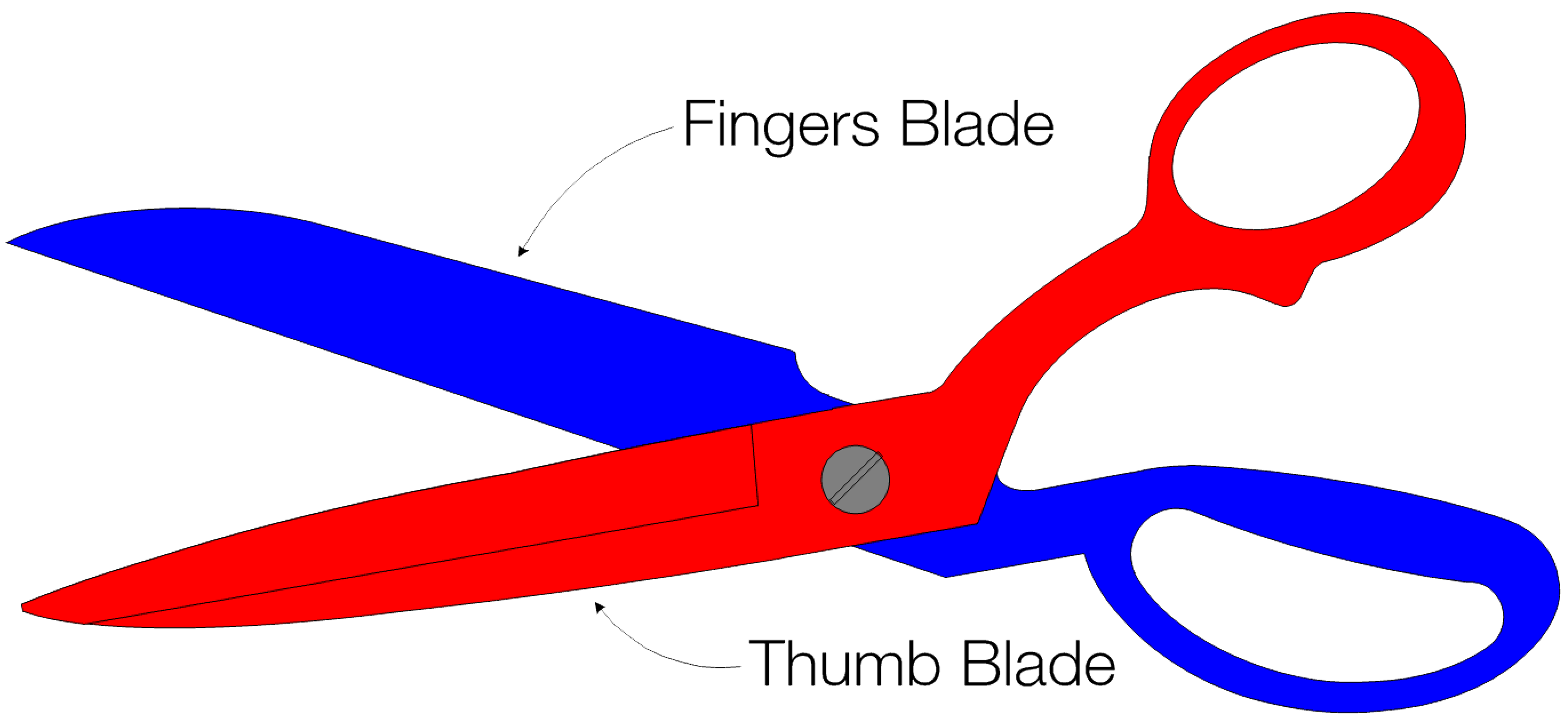
Scissor parts |
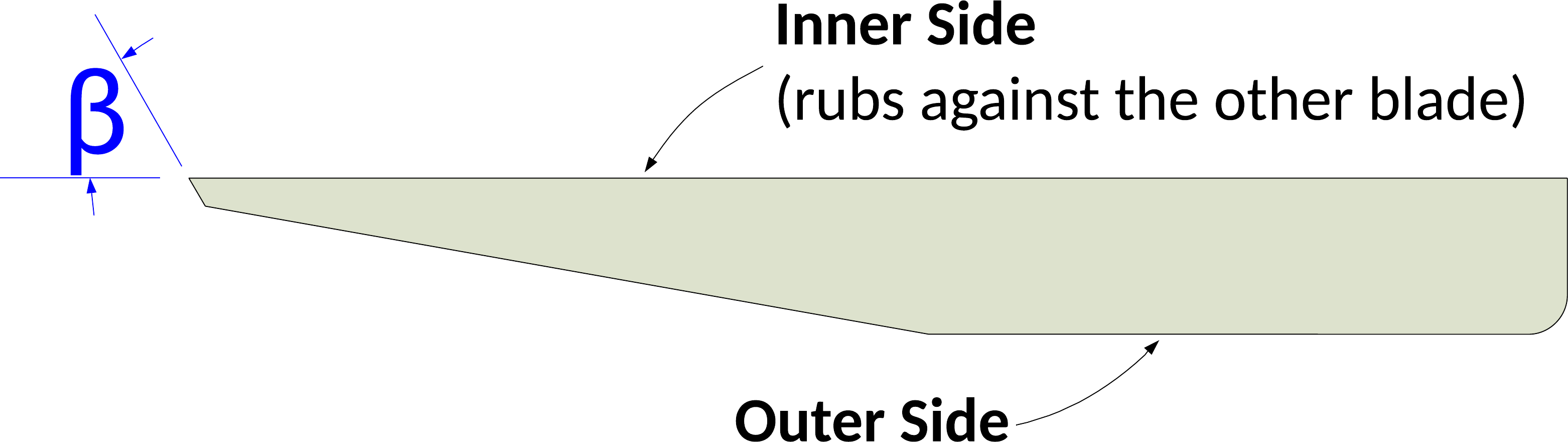
Sectional view of the cutting blade |
Scissors are sharpened according to the angles shown below.
Unless the scissors need to have a really honed edge, honing is not recommended for scissors. Stop after the sharpening step (but with a high grit level - 1,000 or so).
Some scissors have differing angles for the Thumb Blade (shown in red) vs. the Fingers Blade (shown in blue). In those cases, separate angles are shown in the table below.
I believe more in the scissors than I do in the pencil.
Truman Capote

SC-60 scissors jig

SVX-150 scissors jig
The Tormek SC-60 Scissors jig is the best to use for these. The Tormek SVX-150 Scissors jig will also work well.
When sharpening scissors, use the vertical position with the grindstone rotating towards the blade. This keeps the SC-60 or SVX-150 properly aligned to the grindstone. (If you use the horizontal position, the grindstone will pull the scissors away from the jig.)
However, if you are sharpening left-handed scissors and they cannot be disassembled into the two pieces, you will need to sharpen from the horizontal position as the piece not being sharpened would interfere with the process otherwise (it would hit the Tormek machine).
Use of diamond wheels is not recommended. The sharpness of the angle for sharpening can damage the wheel. (And the SG grindstone works quite well.)
When sharpening salon or barber scissors, the Tormek is not recommended. Instead, use a specialized tool like the Hira-To Flat Hone Sharpening Machine. If you do choose to sharpen these scissors on the Tormek, be sure to use the SJ Japanese Waterstone.

Scissors align correctly

Scissors with gap at the ends

Scissors with bottom blade too long

Scissors with top blade too long
After sharpening, if the tips of the of the scissors do not meet, the length of one or both blades should be shortened. The most commonly seen is in the second picture where there is simply a gap at the ends where they should meet.
The black lines in the bottom 3 pictures to the left outline (in a very exaggerated manner) the shape of the blades after the ends have been shortened.
This can generally be done on the same grinding wheel as the one used to sharpen the blade. The sharpener should also check to ensure there are no sharp edges on the backs of the blades which are raised by doing this. If this happens, those should be cleaned up.
Note to the sharpener: if the scissors are very high quality, you may want to talk with the owner before making any of these adjustments.
As you do this more often, you may find that you can identify this risk before starting the sharpening process. If so, it is best to secure approval before making any changes to what may be very beloved scissors (especially if they were handed down from a loved family member).
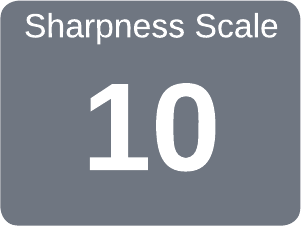
Example icon
Sharpness scales (as shown in the grey icon to the left) are used to indicate the recommended sharpness for the blades noted above. You can click on any of the icons showing the sharpness scale and be redirected to the page describing this more. Lower numbers are duller; higher numbers sharper.
These are general recommendations; you will need to use your own judgment, based on the knive’s intended purpose.
